The objective of the proposed ILP Task Force is to provide a new framework for mineral exploration targeting. This requires detailed knowledge on the lithosphere-scale structure, including detailed knowledge of the crust, together with the improved and enhanced understanding of the impact of various plate tectonics and mantle dynamics processes on the lithosphere composition and architecture.
ANNUAL REPORT-2022 ANNUAL REPORT-2021 ANNUAL REPORT-2020 ANNUAL REPORT-2019
The first major aim of this proposed Task Force is to extend the WSM database with a quality ranked compilation of stress magnitude data. In addition, the current WSM database only compiles the stress data for the upper 40 km of the Earth’s crust to represent the crustal stress. However, most of the global scale geodynamic models need to be calibrated with stress data on the deeper part of the Earth’s lithosphere. Therefore, as the second major aim of this proposed Task Force, we will systematically compile the lithospheric stress data.
PROPOSAL EMAIL WEBSITE ANNUAL REPORT-2025
ANNUAL REPORT-2024 ANNUAL REPPRT-2023 ANNUAL REPORT-2022 ANNUAL REPORT-2021
PROPOSAL EMAIL WEBSITE ANNUAL REPORT-2025
ANNUAL REPORT-2024 ANNUAL REPORT-2023 ANNUAL REPORT-2022 ANNUAL REPORT-2021
The objective of the proposed ILP Task Force is to coordinate the Global Heat Flow Data Assessment Project in order to provide a quality controlled, authenticated global database of heat flow values and other thermal data. This project supports the International Heat Flow Commission (IHFC) whose mission includes promoting geothermal research and maintaining and disseminating the Global Heat Flow Database to the global community of Earth Scientists. To this end, screening, assessing and updating of each data entry compiled in the Global Heat Flow Database since 1939 is required. All project collaborators contribute with the revision of selected papers in this process.
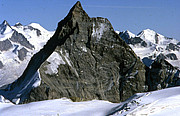
TOPO-EUROPE - 4D Topography Evolution in Europe: Uplift, Subsidence and Sea Level Rise stands for the geoscience of coupled deep Earth and surface processes, taking Europe and its continental margins as a natuarl laboratory. TOPO-EUROPE pursues an integrated solid Earth science approach, closely linking monitoring ans seismic imaging with reconstruction of the geological record and process modeling.
PROPOSAL EMAIL ANNUAL REPORT-2025
ANNUAL REPORT-2024 ANNUAL REPORT-2023 ANNUAL REPORT-2022 ANNUAL REPORT-2021
The CC aims to follow up on existing projects studying seismicity, the Main Himalayan Thrust (MHT), and lithospheric structure in the Himalaya, with particular focus on the Himalaya in Nepal and Bhutan. It will build on existing collaborations to exchange ideas and work together to address key research questions and insights.
ANNUAL REPORT-2024 ANNUAL REPORT-2022 ANNUAL REPORT-2021
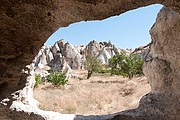
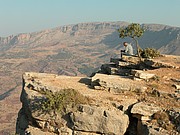
Understanding of geodynamic processes and their evolution at all scales is important since it provides useful insight on the interaction between crust and mantle dynamics, controlling tectonic evolution of orogenic systems. Here, proposed ANATEC research project uses Anatolia as a premier case study to test lithosphere evolution models because there is a vast amount of information on the lithospheric and crustal structure of Anatolia as well as its geological development. Nevertheless, proposed (mostly qualitative) geodynamical models have been unable to explain several present day tectonic anomalies, and many of these have not been tested against regional geological, geophysical and petrological observations. With strong interdisciplinary connections, this ILP proposal will guide new tectonic modeling strategies for frontier research on Anatolia at the geologic setting of a so-called “tectonic crossroads”. Furthermore, by exploring Anatolia, we will be able to gain insights on surface and crustal response to mantle dynamics for various geodynamic models (e.g slab break off, tearing, subduction roll back) and their role in the evolution of geological processes, such as seismicity, volcanism, plateau uplift and basin formation on a global perspective.
ANNUAL REPORT-2025 ANNUAL REPORT-2024 ANNUAL REPORT-2022 ANNUAL REPORT-2021
The Global Geo Transects programme will initiate and coordinate a series of projects aimed at providing integrated geoscientific interpretation in corridors along strategically selected profiles.
The anticipated outcome will be a series of published fully interdisciplinary geotransects based on the research dissemination of a series of research projects long each transect.
ANNUAL REPORT-2025 ANNUAL REPORT-2024 ANNUAL REPORT-2022 ANNUAL REPORT-2021
East Antarctica is the least investigated region of continental lithosphere on Earth. At the heart of the former supercontinent of Gondwana, much of the landmass has yet to be observed directly, and many terranes remain enigmatic under the cover of ice. Although its location is remote from centres of human habitation, melt water from the great ice sheets of East Antarctica will significantly impact sea level rise in low-lying areas of many countries within a generation, and have a profound, extensive impact on generations to come. The lithosphere, together with the oceans and atmosphere, interacts with the ice sheets through feedbacks between coupled systems. We propose to aid international programmes to combine their field, data-compilation, and computer modelling activities, drawing on best practice established in other continents, through the establishment of an ILP Coordinating Committee for the Lithosphere of East Antarctica.
ANNUAL REPORT-2025 ANNUAL REPORT-2024 ANNUAL REPORT-2022 ANNUAL REPORT-2021